
Women's double-breasted coat: the guide to autumn's iconic model
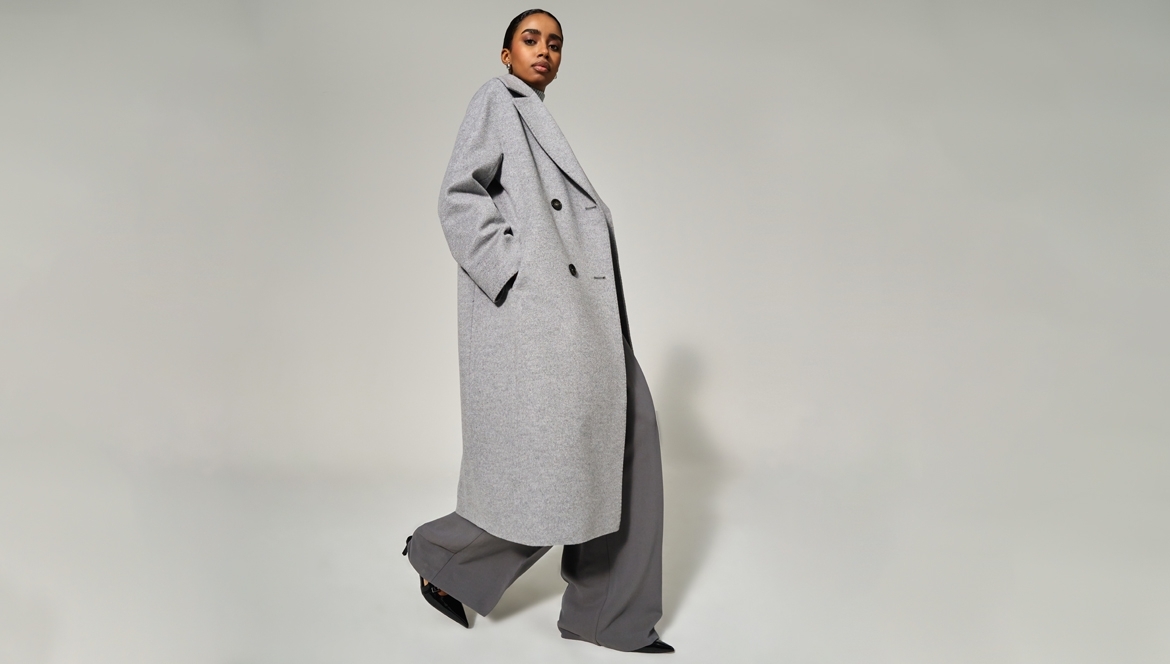
In the firmament of the high-end female wardrobe, few garments possess the expressive power, historical significance, and rigorous grace of the double-breasted coat. Historically born from military and maritime influences, this outerwear piece has evolved from its purely functional origins to become an absolute symbol of power, elegance, and sophisticated tailoring. For a woman seeking not just shelter from the first autumn breezes, but a true style statement, the women's double-breasted coat represents the choice of excellence: an aesthetic investment capable of traversing seasons while keeping its visual impact intact.
The complexity of a double-breasted coat lies in its apparent simplicity. Unlike the single-breasted version, which follows the lines of the body with a linear opening, the double-breasted requires a play of weights, overlaps, and millimetric geometric proportions. Every millimeter of excess fabric, every slight asymmetry in button placement, or the angle of the lapels can compromise the harmony of the whole. In this complete guide, curated by the historic ateliers of Cinzia Rocca, we will explore the anatomy, history, style rules, and the sartorial art hidden behind the creation of this timeless masterpiece of women's outerwear.
Anatomy of the women's double-breasted coat: buttons, lapels, fit
To fully understand the value of a high-end women's double-breasted coat, it is essential to analyze its individual structural elements. Every construction detail is not a simple aesthetic ornament, but an engineering component designed to guarantee drape, comfort, and durability over time.
The crucial role of lapels
The lapels, or collars, define the very personality of the coat. In the double-breasted model, the most classic and prestigious type is represented by peaked lapels. Characterized by points facing upward and outward, these lapels create an optical lengthening effect, visually widening the shoulders and slimming the waistline. In more contemporary and deconstructed models, it is not uncommon to find notch lapels or shawl collars, which lend a softer and more relaxed allure. The construction of the lapel requires extraordinary manual skill: the application of the under-collar and the internal canvassing must work together so that the lapel sits perfectly on the chest, without gapping or lifting unnaturally.
The geometry of buttons
The fastening is the visual focal point of the double-breasted coat. The classic configuration involves the arrangement of buttons in two parallel rows. The most famous formula is the "six-on-two" (six total buttons, of which only two are functional), inherited from the male sartorial tradition. However, there are equally elegant variants, such as the "four-on-two" or the more minimalist "two-on-one." A detail that distinguishes an industrial garment from a high-tailoring one is the presence of the internal "anchor button" (or jigger button), fundamental for keeping the inner part of the fabric taut and avoiding unsightly structural sagging.
Fit and shoulder construction
The fit of a contemporary double-breasted coat must be able to combine structure and fluidity. The shoulder can be structured, with light padding defining the posture, or hammer, raglan, or dropped, for a softer and more deconstructed effect. The armhole must be designed to allow movement and the layering of fine cashmere knitwear without creating restriction. On the back, a center vent or double side vents ensure a fluid and graceful walk, following the natural movement of the female body.
Double-breasted vs. single-breasted: when to choose one over the other
The choice between a single-breasted and a women's double-breasted coat is a strategic decision that influences the entire aesthetic of an outfit.
- The silhouette and volumes: The single-breasted creates a continuous line that tends to visually lengthen the figure. The double-breasted, on the other hand, adds a slight thickness to the front due to the overlapping fabric. This extra volume, if skillfully modeled, does not add bulk but defines the figure, structuring the torso and creating a hinted waistline.
- The level of formality: Historically, the single-breasted is considered more versatile, while the double-breasted retains an innate aura of formal and rigorous elegance. An elegant double-breasted coat in noble fabric instantly elevates even the simplest outfit.
- Thermal protection: From a purely functional standpoint, the double barrier of fabric makes the double-breasted inherently warmer and more protective against wind, especially if made of pure fibers like alpaca or baby llama.
5 outfits with the double-breasted coat for autumn
- Business chic rigor: Pair an elegant double-breasted coat in navy blue or charcoal gray with a full-leg tailored trouser suit and an ivory silk blouse.
- Sophisticated leisure time: Combine an oversize double-breasted model in camel with premium straight-cut jeans and a cable-knit sweater. It is the essence of "effortless chic".
- Evening allure and the fluid dress: Drape a long model over a silk knit midi dress or a fluid satin slip dress for a regal and mysterious effect.
- The contemporary masculine-feminine contrast: Pair a structured double-breasted with a midi pleated skirt. A slim belt cinched over the closed coat will create an extremely feminine silhouette.
- Monochromatic layering: Choose a neutral color palette — like mud or dove gray — and pair a women's double-breasted coat in cashmere with matching flannel trousers for a luxurious and cozy effect.
The Cinzia Rocca sartorial craftsmanship
Behind a women's double-breasted coat signed Cinzia Rocca lies a history of artisanal knowledge dating back to 1953. Only the noblest fibers are used: cashmere, alpaca, baby llama, and the finest virgin wool.
One of the most prestigious techniques employed is "double-faced" (double fabric) processing. This technique involves joining two layers of noble fabric connected by an invisible binding thread, which are then sewn invisibly by hand. The result is an unlined coat, incredibly light yet very warm, a masterpiece of sartorial engineering.
Frequently Asked Questions
- Is the double-breasted coat suitable for a full bust? Yes, the secret lies in choosing peaked lapels, which verticalize the neckline, and lower-placed buttoning.
- How to recognize luxury quality? Look for perfect pattern alignment, buttons in natural materials like horn or mother-of-pearl, and high-quality linings in noble fibers like silk.
- What is the ideal length? The midi (knee-length) is the most versatile; the maxi (ankle-length) offers dramatic presence; the short (caban style) is perfect for a dynamic and practical look.