
Wool or Cashmere Coat: Guide to Choosing the Perfect Women's Wool Coat or Noble Fiber for Autumn
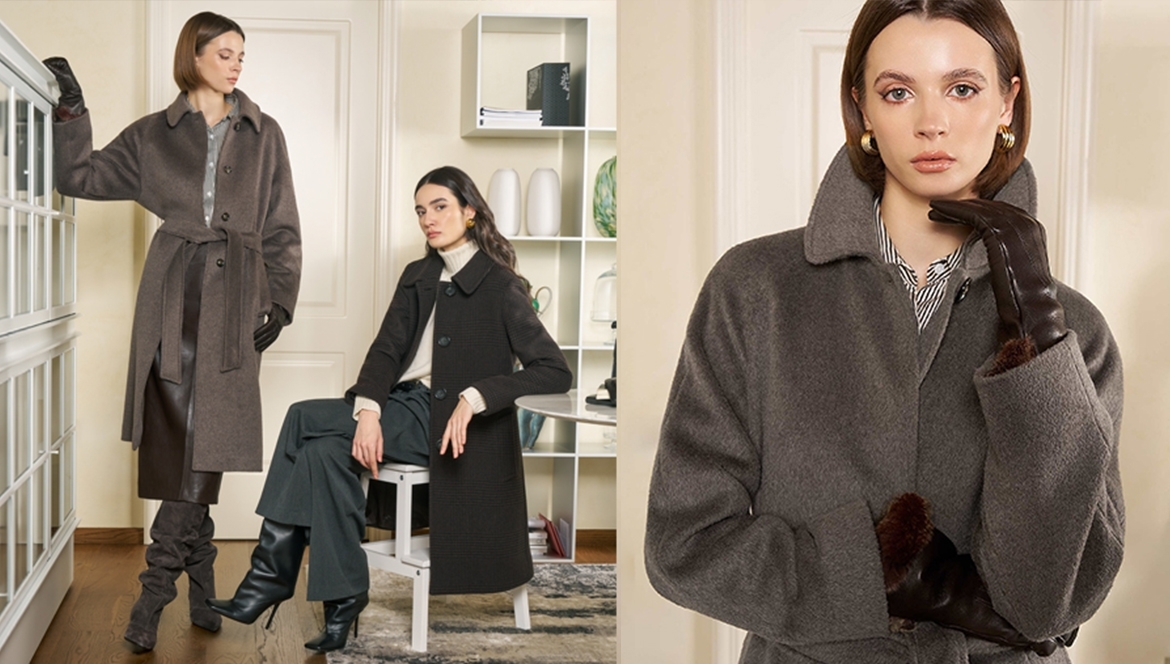
Choosing between virgin wool and cashmere is not simply a matter of prestige, but of harmony between lifestyle, climate, and fit. Virgin wool offers structure, incredible resistance to daily wear, and impeccable drape, ideal for geometric silhouettes and tailored trench coats. Cashmere, with its exceptional thermal lightness (up to eight times superior to wool) and its extraordinarily silky hand, is perfect for fluid, enveloping garments and for those seeking maximum thermal comfort without the weight of a traditional coat. Both fibers represent a lasting investment if processed according to high Italian craftsmanship.
When temperatures begin to drop and autumn imposes its discreet rhythm, the search for the perfect women's wool coat or cashmere coat becomes an essential style ritual for those who appreciate sartorial excellence. It is not just about covering up, but about choosing the armor of elegance that will accompany us throughout the cold season. In the vision of Cinzia Rocca, an Italian sartorial maison that since 1953 has been shaping the world's noblest yarns, outerwear is the centerpiece of the female wardrobe: an investment in beauty, sustainability, and savoir-faire that transcends the fleeting trends of the moment.
However, when faced with the choice between a high-end women's wool coat and an enveloping pure cashmere model, many women wonder about the real technical, performance, and fit differences. This guide was created to offer you an in-depth and transparent analysis, far from marketing clichés, to help you identify the ideal fiber for your daily needs, your lifestyle, and your silhouette.
Virgin wool and cashmere: two noble fibers compared
What is the true origin of these extraordinary raw materials and where does the profound difference between a wool and cashmere coat lie? To understand the excellence of a garment, we must take a journey that starts from nature and arrives at the historic weaving laboratories of the Biella district, where our maison rigorously selects the best yarn lots.
Virgin wool is the fiber obtained exclusively from the shearing of healthy sheep, used for the first time and never regenerated or recovered from previous processes. When we talk about fine wools for luxury outerwear, we refer to extra-fine merino wools or virgin wools selected for fiber length and the absence of impurities. The structure of the wool fiber has a natural elastic undulation (the so-called crimp) and a surface covered with microscopic scales that allow it to trap air, offering excellent thermal insulation and extraordinary resistance to deformation.
Cashmere, on the other hand, is not properly wool, but a very fine undercoat (called duvet) obtained from the Hircus goat, native to the mountainous regions of Central Asia, such as Mongolia and Tibet. To protect themselves from winter temperatures that approach -40°C, these goats develop an incredibly soft and dense undercoat beneath the rougher outer hair. In spring, during the natural molting season, shepherds collect this precious fiber not through shearing, but through a very delicate manual combing process. From each individual goat, barely 150-200 grams of raw cashmere are obtained per year: an intrinsic scarcity that, combined with extraordinary thermal and tactile properties, justifies the high price positioning of this regal fiber.
Since 1953, Rodel S.p.A. has selected and processed these noble raw materials in its historic headquarters in Brescia, transforming them into works of art to be worn. The choice to use only pure virgin wools and superior grade cashmere defines the philosophy of Cinzia Rocca, where every cut and every seam respects the anatomy of the fiber to preserve its natural brilliance and softness.
Differences in heat, weight, and durability
When you find yourself deciding whether to buy a cashmere or wool coat, it is essential to analyze three performance parameters that will directly influence your wearing experience: thermal insulation power, the perception of weight on the shoulders, and the longevity of the fabric over time.
The Thermal Insulation Power
The microscopic structure of cashmere is characterized by extremely thin fibers — with an average diameter ranging between 14 and 16 microns, compared to the 18-24 microns of the finest virgin wools. This infinitesimal thickness means that the air pockets created between the individual fibers are infinitely more numerous and dense. Consequently, cashmere offers thermal insulation that can be up to eight times higher than traditional wool. A cashmere coat will protect you from winter frost with extraordinary effectiveness, keeping your body temperature constant both outdoors and in climate-controlled indoor environments.
The Weight and Drape of the Fabric
Thanks to the fineness of its fibers, a pure cashmere fabric requires a smaller amount of raw material to reach the same warming power as a wool fabric. This translates into extraordinary lightness: wearing a Cinzia Rocca cashmere coat means feeling a soft, almost ethereal embrace that never weighs on the shoulders and follows every movement of the body with fluidity. Conversely, virgin wool has a higher specific weight and greater intrinsic rigidity. This characteristic, far from being a defect, is an exceptional sartorial virtue: wool has the structural strength necessary to support geometric cuts, significant collars, structured shoulders, and precise silhouettes (such as double-breasted coats or military-inspired outerwear) that require impeccable formal composure.
Durability and Wear Resistance
If we consider resistance to rubbing and daily stress, the balance tips in favor of the women's wool coat. The wool fiber is naturally more robust, elastic, and resilient due to its larger diameter and the presence of a thicker outer cuticle. It resists remarkably well to the friction caused by leather bag straps, rubbing under the arms, and the elements. Cashmere, precisely because of its extreme fineness and delicacy, is more sensitive to mechanical abrasion and can exhibit the phenomenon of pilling (the formation of small surface fuzz in areas of greatest friction). Although pilling is a natural reaction of fine short fibers and not a manufacturing defect, it requires more careful care and the periodic use of special combs for noble wools to maintain the coat's silky aesthetic intact.
When to choose wool and when cashmere based on use and budget
How to orient yourself, then, in the final purchase choice? To facilitate your decision, we invite you to reflect on the actual context in which you will wear your Cinzia Rocca garment and the type of investment you wish to make.
Choose the virgin wool coat if:
- You are looking for an outerwear piece to wear every day, ideal for a dynamic city life, for business trips, or for frequent use in public transport and cars.
- You appreciate structured silhouettes, defined sartorial cuts, belted coats that mark the waistline, or masculine-cut jackets that require a consistent and firm fabric.
- You desire a high-end garment that requires simple maintenance and has high resistance to humidity and light rain, thanks to the natural water-repellent properties of virgin wool.
- You want to allocate your budget to an excellent quality-price ratio within the accessible luxury segment, being able to count on a Made in Italy garment destined to remain impeccable for decades in your wardrobe.
Choose the pure cashmere coat if:
- You want to gift yourself a unique sensory experience, characterized by unparalleled softness and a feeling of enveloping and impalpable warmth on the skin.
- You prefer a relaxed style, "quiet luxury" combinations, fluid and draped lines, sumptuous capes, or oversize "dressing gown" coats that caress the figure with effortless elegance.
- You are looking for a coat to wear for special occasions, elegant evenings, or to instantly elevate a minimalist outfit consisting of tailored trousers and a silk blouse.
- You are aware of the extreme value of the raw material and are willing to dedicate careful care to your garment (specialized dry cleaning, delicate brushing, and adequate rest in the closet on shaped hangers) to preserve its majestic beauty over time.
How to recognize the quality of both fibers
In a market saturated with apparently similar proposals, knowing how to evaluate the authentic quality of a fabric is the only tool available to the conscious customer for making an intelligent purchase.
The Tactile and Visual Test
A high-quality virgin wool fabric must feel soft, elastic, and absolutely not "sting" the skin, and present a uniform surface, free of rigid or opaque fibers. To the touch, it must offer a sensation of pleasant warmth and compactness. Superior quality cashmere, on the other hand, is recognized by its extraordinary silky softness: touching it, you should not perceive any resistance or roughness. Furthermore, true fine cashmere possesses a delicate natural brilliance — a discreet and deep glow, never artificial or shiny like that of synthetic fibers — due to the purity of the duvet used.
"Double" Fabric Tailoring
An unequivocal indicator of sartorial luxury is the double fabric (or double-face) processing. This complex technique, mastered with expertise by the artisans of Rodel S.p.A., involves joining two layers of fabric using a very thin invisible binding thread. The edges of the garment are then opened and folded inward, to be entirely hand-sewn. The result is an unlined coat, incredibly light and elastic, finished in a specular way both inside and out: a masterpiece of aesthetic cleanliness and comfort.
Frequently Asked Questions (FAQ) about wool and cashmere outerwear
How can I tell if a cashmere or wool coat is original and eco-friendly?
Traceability is key. Always check the internal composition label: it must report clear wording such as "100% Virgin Wool" or "100% Cashmere". Avoid garments that show generic percentages of "wool" or unspecified "mixed fibers". Furthermore, authentic Made in Italy, such as that guaranteed by Rodel S.p.A., ensures compliance with the strictest European regulations regarding environmental protection, traceability, and animal welfare throughout the entire production cycle.
Does a cashmere coat always pill? How can I remove them?
The appearance of small surface pills (pilling) in areas subject to continuous rubbing is a natural physical consequence of the finest and softest cashmere fibers and is not an indication of poor quality. To remove them safely and effectively, we recommend periodically using a specific cashmere comb or a high-quality electric fabric shaver, acting with delicacy and without exercising excessive pressure on the fabric. Absolutely avoid the use of common razors which could cut the warp threads of the fabric.
Can I wear my virgin wool coat in the rain?
Yes, virgin wool possesses natural water repellency thanks to the residual presence of lanolin and the scaly structure of its fibers, which tend to let water droplets slide off the surface before they penetrate inside. If the coat gets wet under light rain, simply hang it on a shaped wooden hanger in a well-ventilated environment, away from direct heat sources, and let it dry naturally. Once dry, a delicate brushing in the direction of the nap will restore the original compactness of the fabric.
What is the correct way to store the coat at the end of the season?
At the end of winter, before storing your coat in the closet for the seasonal change, we recommend having it dry cleaned at a specialized laundry. Residual dirt and perfumes can indeed attract moths. Subsequently, store the garment hanging on a sturdy, shaped hanger inside a breathable fabric cover (absolutely avoid plastic bags that trap humidity). Place a natural anti-moth agent of high quality in the cover, such as red cedarwood or lavender, to protect the precious natural fibers until the following autumn.
The conscious choice of timeless quality
Ultimately, deciding between a women's wool coat and a cashmere model is not a choice of absolute superiority of one fiber over the other, but a statement of your own personal style and your concrete needs. Virgin wool will accompany you with proud robustness and impeccable formal structure; cashmere will wrap you in a caress of pure luxury and impalpable warmth during the most exclusive and special moments of your life.
What unites every single proposal from the Cinzia Rocca Luxury, Cinzia Rocca Icons, and our Permanent Collection is the obsession with detail, the love for Italian tailoring, and the certainty of offering you a masterpiece that does not fear the passage of time. Choosing our maison means embracing a history of style born in 1953, rooted in Italian territory and projected toward a future of conscious and eternal elegance.